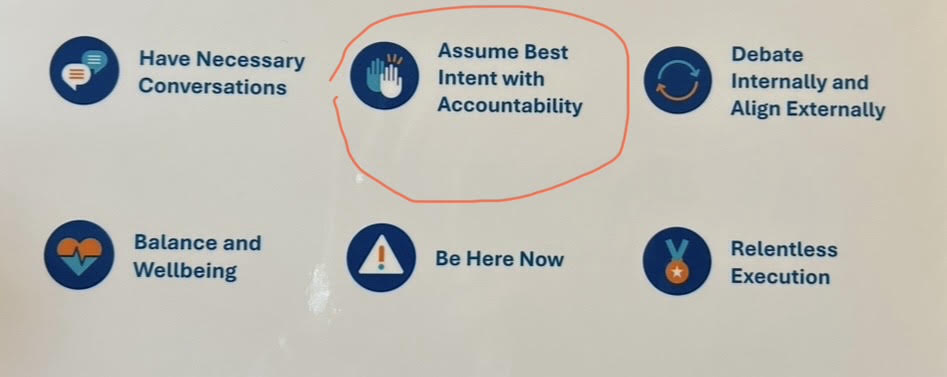
When someone does something that we perceive to be wrong, our immediate reaction is to assume negative intent: “They must have done it because they are bad people, because they don’t care about others, because they have a bad character.” So often, these assumptions lead to distrust, resentment and breakdown in relationships.
What if there was one question that can help us as leaders practice empathy and humanizing others? In my book “The Positive Intent Mindset”, I share one question that we can ask ourselves and that can open the door to shifting our mindset and assume positive intent.
After we observe someone doing something that we perceive to be wrong, we can ask ourselves: “Have I done something similar to this in the past?” This question enables us to be honest with ourselves. And most of the time, we will realize that we have indeed done something similar. Which doesn’t make it okay- it just makes us feel more similar to them and empathetic towards them.
While I was writing the book, I tried experimenting with this approach over a two-week period. Every time I got annoyed by the actions of a colleague, friend, family member, or total stranger, I asked myself if I had done something similar in the past. Here are the results:
• “Have I ever turned right on a red light even though the sign clearly said No Right Turn on Red?” Yes!
• “Have I ever left a dirty dish in the sink despite the dishwasher being empty?” Yes!
• “Have I ever left a text message unanswered for a whole day even though I could have answered it earlier?” Yes!
Since I have done all of these things myself (some of them repeatedly and intentionally), what right do I have to judge others when they engage in exactly the same behaviors? We all want others to show grace when we mess up, so why do we not do the same when the roles are reversed?
There are some parallel examples that organization leaders can ask themselves. Here are a few:
• “Have I ever arrived late to a meeting because I left home late without a valid excuse?”
• “Have I ever rolled my eyes at a colleague’s suggestion because it didn’t fit with my plan?”
• “Have I ever accidentally or intentionally hit Reply All on an email that could have just gone to one person?”
One simple question that can help us shift our mindset and assume positive intent. Which, as I explain in the book, not only strengthens trust and collaboration with others, but also makes us much happier as leaders and human beings.
————————————————————————————————–
Amer Kaissi is a Leadership Keynote Speaker, Professor, Executive Coach and Author of five books. His most recent book is “The Positive Intent Mindset: Exceptional Leadership Through Trust & Accountability”.