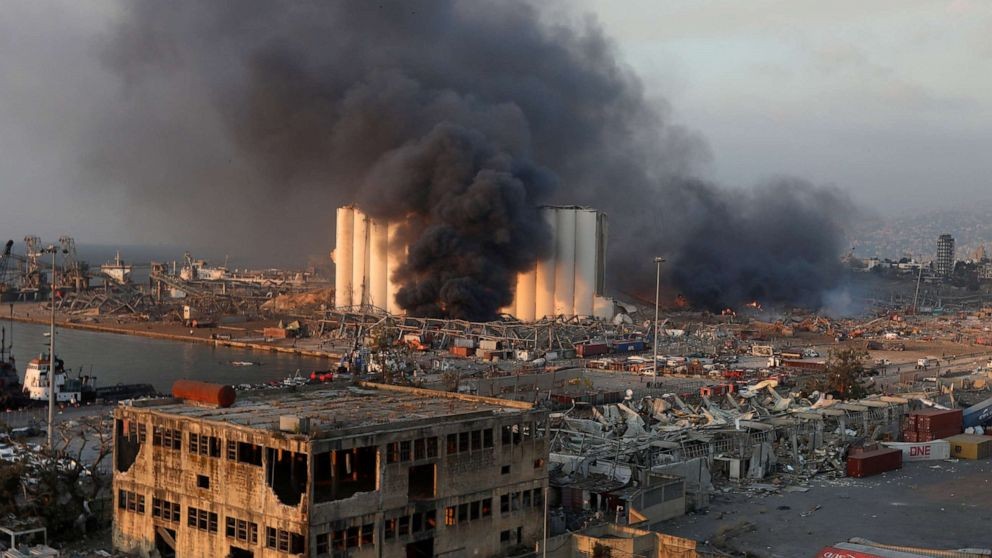
By now, everyone has seen the horrible pictures and terrifying videos of the massive explosion that hit Beirut yesterday.
As a Lebanese-American who spent the first 23 years of my life in Beirut, the news hit very close to home. My first reaction, like millions of other people of Lebanese origins, was to check on family and friends. Some of my family members live very close to the site of the explosion. They were not hurt, but they said it was like nothing they ever heard, even during the civil war and the numerous explosions that followed after its end. It felt like an earthquake followed by a nuclear explosion. Their homes were slightly damaged, but it was nothing compared to what happened to other people who were unfortunate to be closer to the explosion and who lost their lives and property.
In the immediate aftermath of this terrible tragedy, I talked to many relatives and friends and I felt a sense of deep outrage among them. The worst part is that it was all preventable: the explosion, as the initial investigations have shown, was mainly due to negligence and corruption. But this is not what I want to talk here. Yes, the responsible people should be held accountable for this terrible tragedy, but that is for other people to address. What I want to talk about is resilience.
Growing up in Lebanon, one of the stories that I frequently heard was that Beirut was destroyed and rebuilt seven times during its 5,000-year history. Maybe that explains the extreme resilience of the city and its people. Resilience, first and foremost, is about dealing with setbacks, even if they are the size of an earthquake. Psychological research shows that resilient people tend to be realistically optimistic. They interpret setbacks as:
- Temporary: “it will go away soon”
- Local: “it’s just this one situation”
- Changeable: “I can do something about it”
My experiences in my childhood have taught me that the Lebanese are always realistically optimistic. Even during the darkest hours of the civil war, we knew how dire the situation was, but we always believed that, somehow, we will survive and prevail. And we did.
At the beginning of the COVID pandemic, some people asked me how I was dealing with the lock-down. I thought to myself: I’ve been through dozens of lock-downs while I was growing up in the civil war. We stayed at home for weeks at end until the fighting outside persisted. We missed out on school days and sport activities and normal life. But we were resilient and we survived.
As the smoke and dust settles and as the people mourn their relatives and friends, I know that Beirut, the most resilient city in the world, will rise and will rebuild again.
————————————————————————————————————-
Dr. Amer Kaissi is a Professional Speaker, Executive Coach and an expert on Leadership, Humility & Ambition, Assuming Positive Intent, Psychological Safety & Accountability, Growth Mindsets & Resilience.