
Welcome to the Monthly Newsletter by Amer Kaissi
Edition #9, July 2020
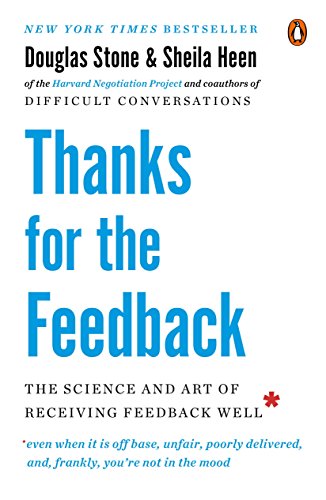
The book that I want to share with you in this edition is “Thanks for the Feedback: The Science and Art of Receiving Feedback Well” by Douglas Stone and Sheila Heen (2014). You may recognize the authors from their other best-selling book “Difficult Conversations.”
The main idea in this book is that it doesn’t matter how much authority or power a feedback giver has; it is the receiver of the feedback who is ultimately in control of what she does and doesn’t let in, how she makes sense of what she’s hearing, and whether she chooses to change. Therefore, our focus as leaders should not be on teaching feedback givers to give better feedback. Rather, our focus should be on teaching ourselves and others as feedback receivers to become more skillful learners.
There are specific alarms that go off in our brains when we get input from others that explain why most of us don’t receive feedback well. These triggers are:
- Truth Triggers: These are are set off by the substance of the feedback itself—it’s typically off, not helpful or factually incorrect. In response, we may feel indignant, wronged, and exasperated.
- Relationship Triggers: These are tripped by the particular person who is giving us the feedback. We typically have strong reactions based on what we believe about the giver (John has no credibility on this topic!) or how we feel treated by the giver (after all I’ve done for her, she criticizes me this way?).
- Identity Triggers: These focus neither on the feedback nor on the person offering it. Rather, they relate to the fact that feedback sometimes causes our identity—our sense of who we are—to be negatively impacted in significant ways. It causes us to feel overwhelmed, threatened, or ashamed and we become unsure what to think about ourselves and what we stand for.
This book is full of practical advice on how to turn off these triggers and improve our ability to listen and learn. For example, even if you decide that 90% of a specific piece of feedback is off target, that last golden 10% might be just the insight you need to grow. Another tip is if the 360 feedback that you just received doesn’t resonate with you, seek the advice of a trusted colleague. Don’t say, “This can’t be true, can it?” Instead, lay out the problem explicitly: “Here’s feedback I just got. It seems wrong. My first reaction is to reject it. But I wonder if this is feedback in a blind spot? Do you see me doing this sometimes, and if so, when?”
I hope you enjoyed this edition of the Newsletter. Every month, I will share with you one leadership or management book that I am reading, and tell you what I learned from it.
———————————————————————————————————————
Dr. Amer Kaissi is a Leadership Keynote Speaker and a workplace culture and high-performance teams’ expert.